

Call us now
07971189946

 Send Inquiry
Contrast Sensitivity Vision Chart
Price 5500 INR/ Piece
MOQ : 1 Piece
Contrast Sensitivity Vision Chart Specification
- Equipment Type
- Eye Chart
- Material
- High-quality printed plastic or acrylic sheet
- Technology
- Printed gradient pattern (Pelli Robson type or similar)
- Properties
- Measures contrast sensitivity, high print accuracy, reusable
- Grade
- Clinical grade
- Driven Method
- Electric
- Dimension (L*W*H)
- Approx. 63 x 38 cm (25 x 15 inches)
- Weight
- Approx. 400-700 grams
- Usage
- Hospital and Clinic
- Sterilized
- Yes
- Sterilization Mode
- Can be wiped with disinfectant
- Compliance Standard
- Meets international ophthalmic standards
- Surface Finish
- Matte to reduce glare
- Letters Size
- Consistent across chart, only contrast changes
- Color
- Black/grey letters on white background
- Reusability
- Yes
- Number of Letters
- Typically 16 triplets (48 letters)
- Contrast levels
- Varied, decreasing letter contrast
- Reading Distance
- Tested at 1 meter or per chart instructions
- Language
- English alphabet provided
- Mounting Options
- Wall mountable or usable with stand
- Chart Type
- Pelli-Robson format (or similar)
Contrast Sensitivity Vision Chart Trade Information
- Minimum Order Quantity
- 1 Piece
- Supply Ability
- 5000 Pieces Per Month
- Delivery Time
- 7 Days
About Contrast Sensitivity Vision Chart
The Contrast Sensitivity Vision Chart is an in-demand tool for clinicians seeking top-notch screening for visual contrast sensitivity. Featuring a rare, top-drawer Pelli-Robson format, it uses consistent letter sizing with varied, decreasing contrast to measure subtle visual deficits. Get reliable results at a standard 1-meter reading distance. Designed with a matte finish to reduce glare, this chart mounts on the wall or stand and is crafted from top-tier, high-quality acrylic or plastic. Sterilization is effortless, adhering to stringent international ophthalmic standards, ensuring excellent clinical performance and long-term reusability.
Optimal Clinical Tool for Visual Contrast Assessment
A Contrast Sensitivity Vision Chart is especially suitable for comprehensive eye exams in hospitals and clinics. Its consistent design ensures accurate testing for patients with varying visual abilities, making it ideal for ophthalmologists, optometrists, and clinical researchers. The chart's robust, sanitized structure makes it perfect for frequent use where reliability and hygiene are paramount, supporting top-tier patient care in both large hospitals and private practices.
Sample Availability and Premium Transportation Options
Samples of the Contrast Sensitivity Vision Chart are readily available for evaluation by professionals or procurement teams. Premium, secure transportation options ensure timely and safe delivery to your facility. The list price reflects clinical utility, precision, and material quality. Our FOB port services support national and international shipping needs, and our customer-friendly sample policy offers trial flexibility prior to bulk orders, ensuring satisfaction with your investment.
Optimal Clinical Tool for Visual Contrast Assessment
A Contrast Sensitivity Vision Chart is especially suitable for comprehensive eye exams in hospitals and clinics. Its consistent design ensures accurate testing for patients with varying visual abilities, making it ideal for ophthalmologists, optometrists, and clinical researchers. The chart's robust, sanitized structure makes it perfect for frequent use where reliability and hygiene are paramount, supporting top-tier patient care in both large hospitals and private practices.
Sample Availability and Premium Transportation Options
Samples of the Contrast Sensitivity Vision Chart are readily available for evaluation by professionals or procurement teams. Premium, secure transportation options ensure timely and safe delivery to your facility. The list price reflects clinical utility, precision, and material quality. Our FOB port services support national and international shipping needs, and our customer-friendly sample policy offers trial flexibility prior to bulk orders, ensuring satisfaction with your investment.
FAQ's of Contrast Sensitivity Vision Chart:
Q: How should the Contrast Sensitivity Vision Chart be mounted for accurate usage?
A: The chart can be wall-mounted or placed on a compatible stand. Ensure it is positioned at eye level and viewed at a distance of one meter, or as per the chart's specific instructions for accurate testing.Q: What is the advantage of the Pelli-Robson format used in this chart?
A: The Pelli-Robson format is specifically designed to assess contrast sensitivity by maintaining a consistent letter size while varying contrast. This offers enhanced precision in detecting contrast deficiencies without size influencing results.Q: When is it recommended to use the Contrast Sensitivity Vision Chart?
A: It is recommended for routine or specialized assessments in clinics and hospitals, particularly when evaluating patients for conditions that affect contrast sensitivity, such as cataracts, glaucoma, or diabetes-related eye disorders.Q: Where can I source these charts from?
A: These clinical-grade charts are available from manufacturers, suppliers, service providers, and traders across India. Contact your preferred local or national medical equipment distributor for procurement details.Q: What is the process for sterilizing the vision chart?
A: The chart's high-quality printed surface allows for standard disinfectant wiping, supporting easy and repeated sterilization. Always use recommended sterilization agents to preserve material integrity and print accuracy.Q: What are the key benefits of using a Contrast Sensitivity Vision Chart?
A: This chart provides clinicians with a reliable, objective measure of visual contrast sensitivity, helping to identify and monitor subtle vision changes and ensuring top-tier patient care in ophthalmic settings.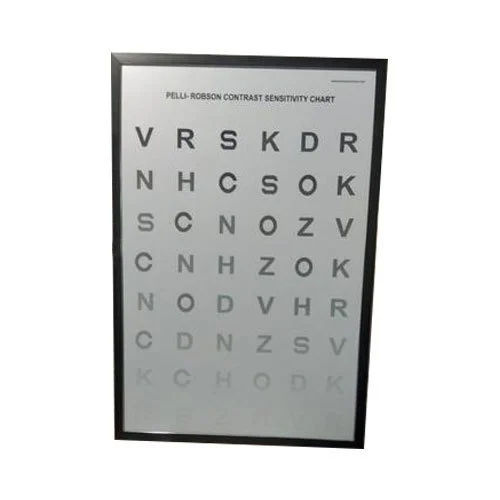
Tell us about your requirement

Price:
Quantity
Select Unit
- 50
- 100
- 200
- 250
- 500
- 1000+
Additional detail
Mobile number
Email

More Products in Eye Testing Chart Category
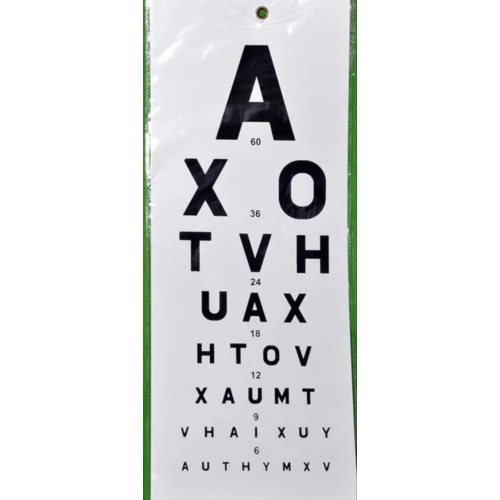
Distance Vision Chart English Letters (Snellen)
Price 150 INR / Piece
Minimum Order Quantity : 1 Piece
Usage : Hospital and Clinic
Equipment Type : Eye Chart
Material : Cardboard/Paper
Sterilized : Yes
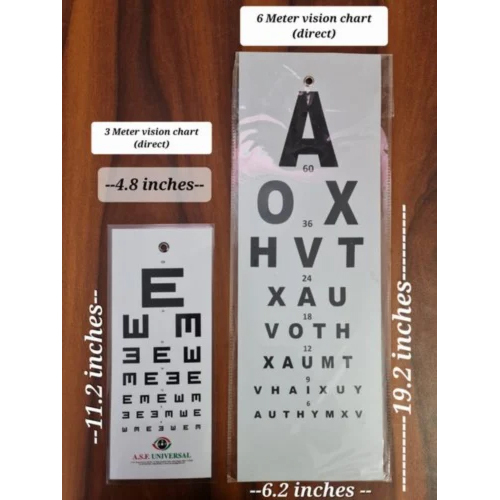
Distance Vision Chart 6 Meter and 3 Meter PVC for Eye Exams
Price 30 INR / Piece
Minimum Order Quantity : 1 Piece
Usage : Hospital and Clinic
Equipment Type : Eye Chart
Material : PVC (Polyvinyl Chloride)
Sterilized : Yes
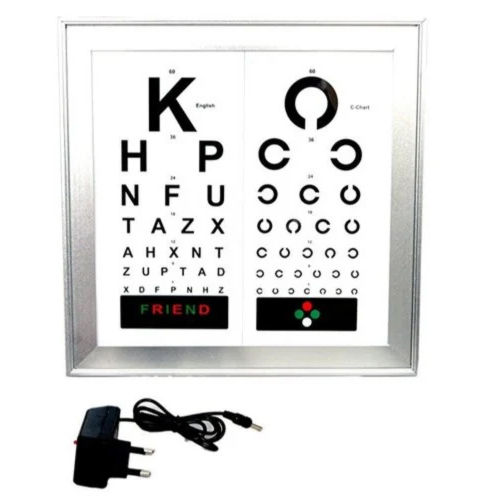
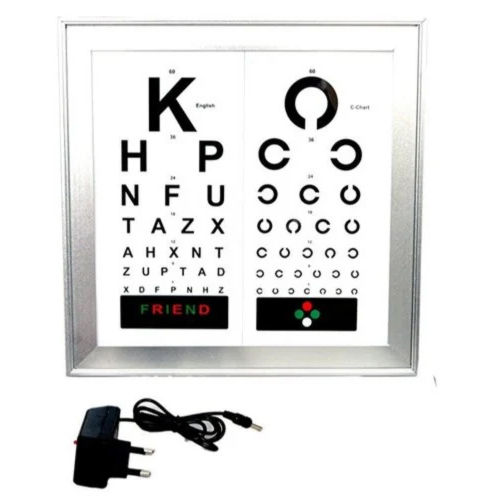
3 Meter 2 Lang LED Vision Chart
Price 1,500 INR / Piece
Minimum Order Quantity : 10 Pieces
Usage : Hospital
Equipment Type : Other, 3 Meter 2 Lang LED Vision Chart
Material : Aluminum
Sterilized : Yes
LED Vision Chart 3 Meter 2 Lang
Price 1500 INR / Piece
Minimum Order Quantity : 1 Piece
Usage : Hospital and Clinic
Equipment Type : Eye Chart
Material : Aluminum
Sterilized : Yes

AA Star Company
GST : 07CTSPA7184E1ZF
GST : 07CTSPA7184E1ZF
Office No. - 208, Building No. - 55, 2nd Floor, Ansari Road, Darya Ganj, Delhi - 110002, India
Phone :07971189946

 Send Inquiry
- Optical Instruments
- Auto Refractometer And Keratometer
- Cataract And IOL
- Eye Testing Chart
- Surgical Instruments
- Eye Testing Trial Frame
- Slit Lamp
- Ophthalmic Refraction Unit
- Medical Equipment
- Trial Lens Sets
- Ophthalmic Equipments
- Auto Refractometer
- Revolving Stool
- Lens Meter
- Intraocular Lens
- Lens Edger Machine
- Optical Lenses
- Artifical Eye
- Colour Blindness Test Books
- Optilab Grinder
- Cautery Machine
- Digital Lensometer
- Medical Ophthalmoscopes
- Eye Testing Equipment
 Send Inquiry
 Send SMS
AA Star Company
All Rights Reserved.(Terms of Use)
Developed and Managed by Infocom Network Private Limited.
Developed and Managed by Infocom Network Private Limited.

